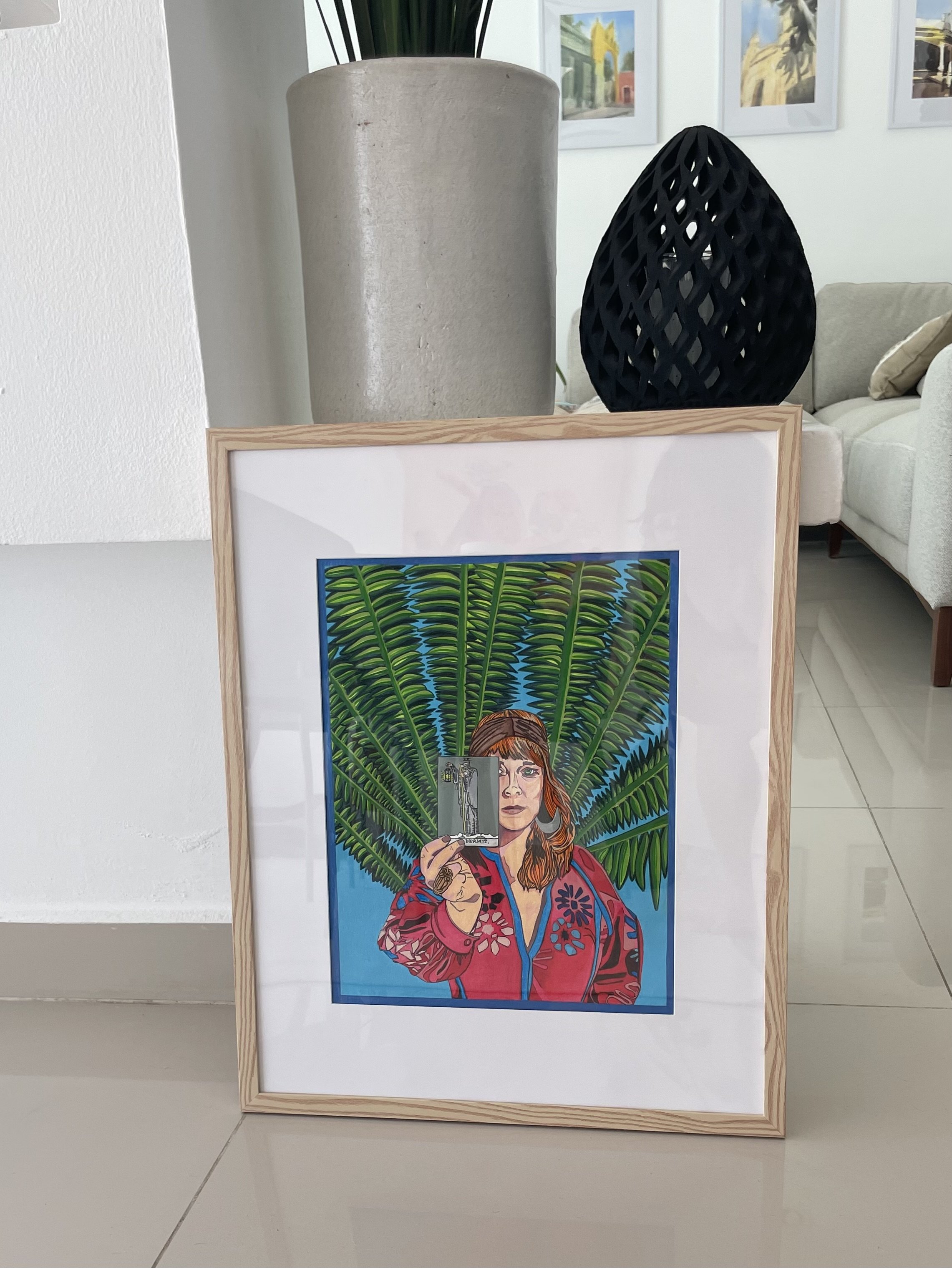
Rituals of Insight
“Most people want to change the world to improve their lives, but the world they need to change first is the one inside themselves.” John C. Maxwell
Rituals of insight are intentional, repeated actions designed to foster self-reflection, personal growth, and deeper understanding. This series is a meditation on the ancient languages our ancestors had with the plant world. It is also a reflection on using tarot as a tool for exploring the psyche, engaging with synchronicity, and accessing the present moment through the archetypes and symbols within it.
As George Washington Carver says best, “the secrets are in plants but in order to elicit them you must love them.” Plants are portals. I have had the pleasure of spending time with each of these plants. I see and greet them in my neighborhood or in the vast jungle of the Yucatan. Some of them I consume as food or medicine. Each has a beautiful story to tell and you can read more information by clicking on each image.
This series was created for a special exhibition that opened during La Noche Blanca in Merida, Yucatan on May 22nd and 23rd in 2026.
La traducción al español está disponible mediante la barra de idiomas situada en la esquina superior derecha. (Versión de escritorio) Para la versión móvil: Haz clic en las tres barras y cambia el idioma.
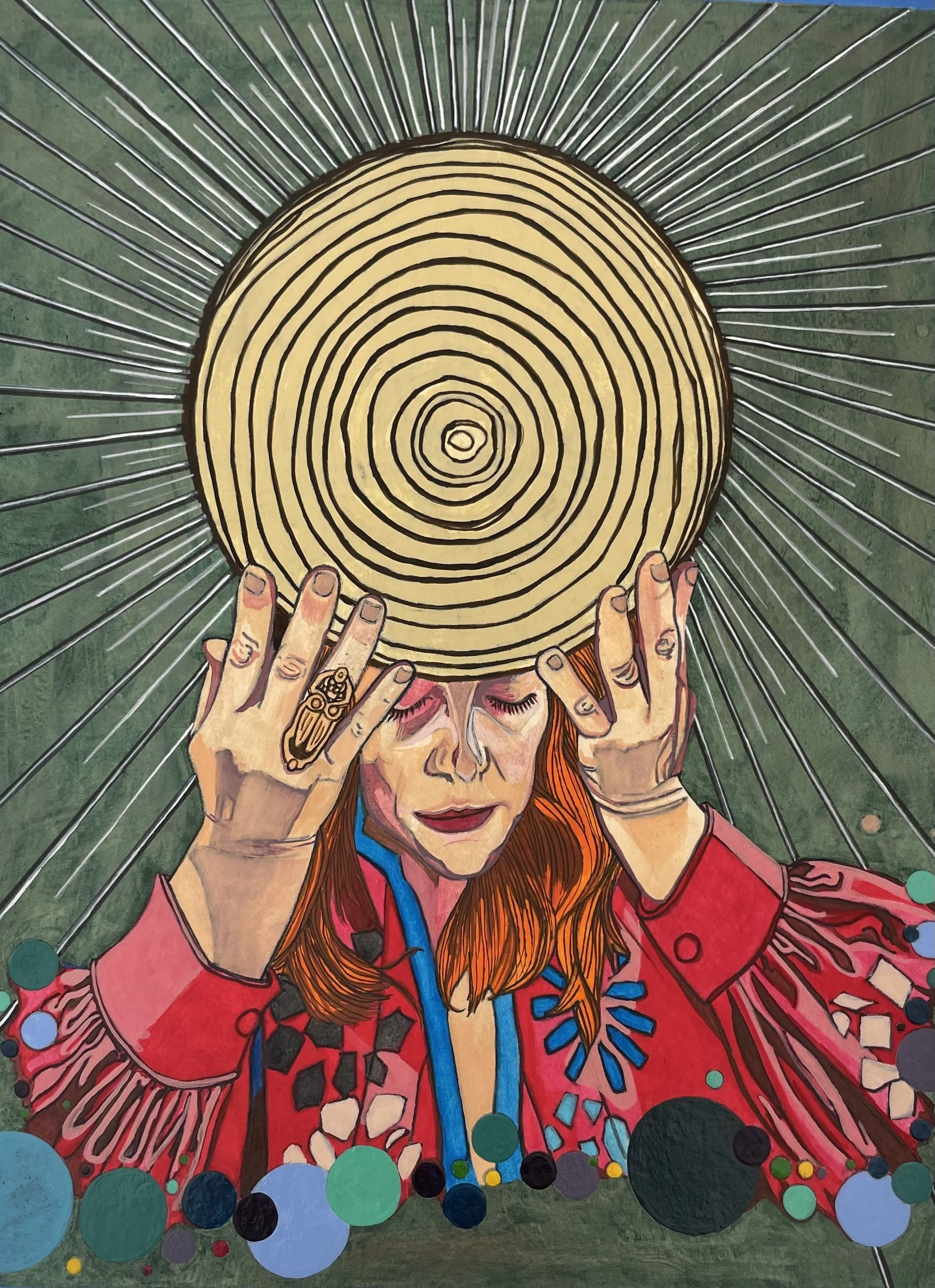
Tree channeling. Palo Santo.
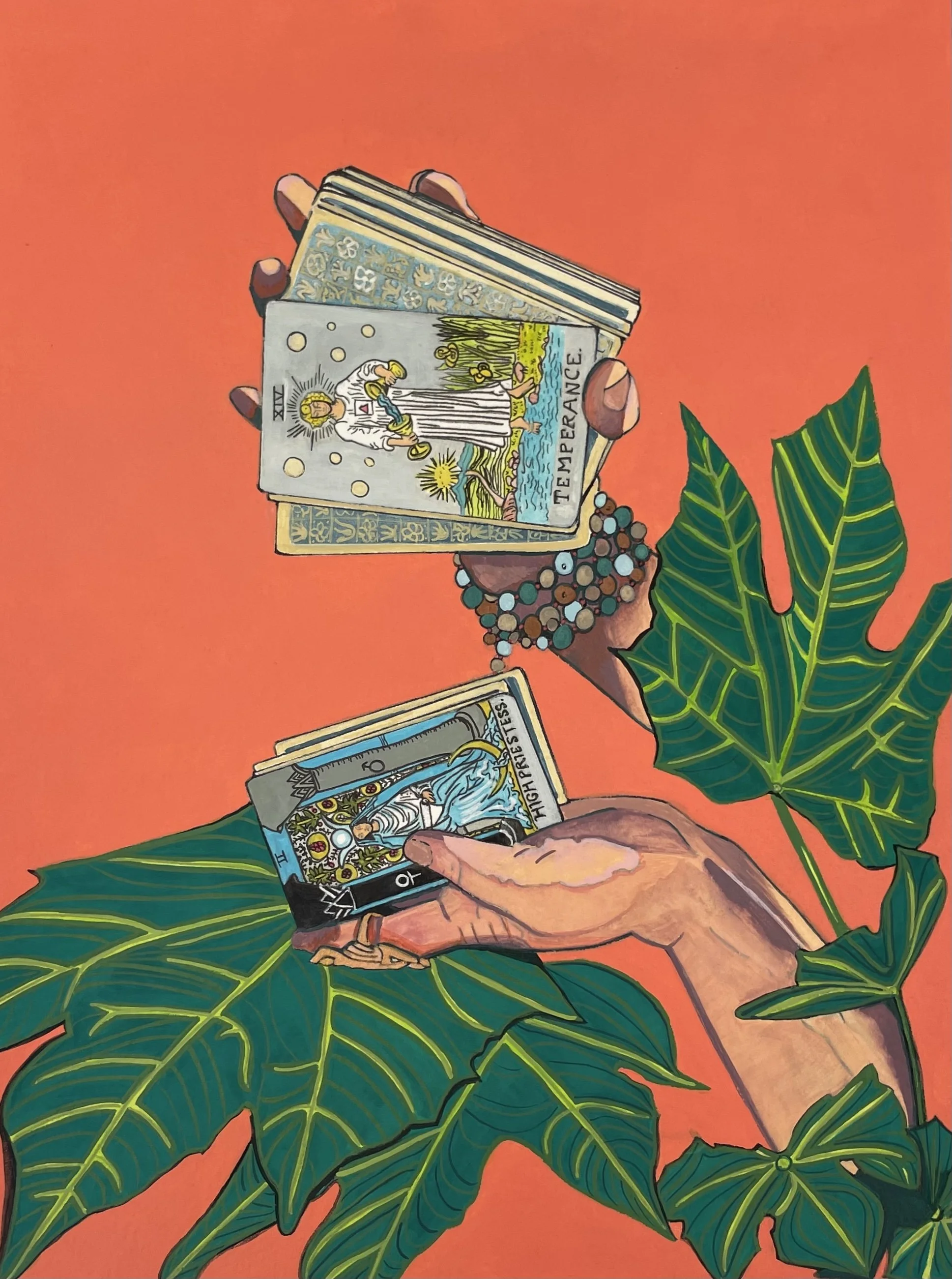
Chaya. Temperance, The High Priestess.
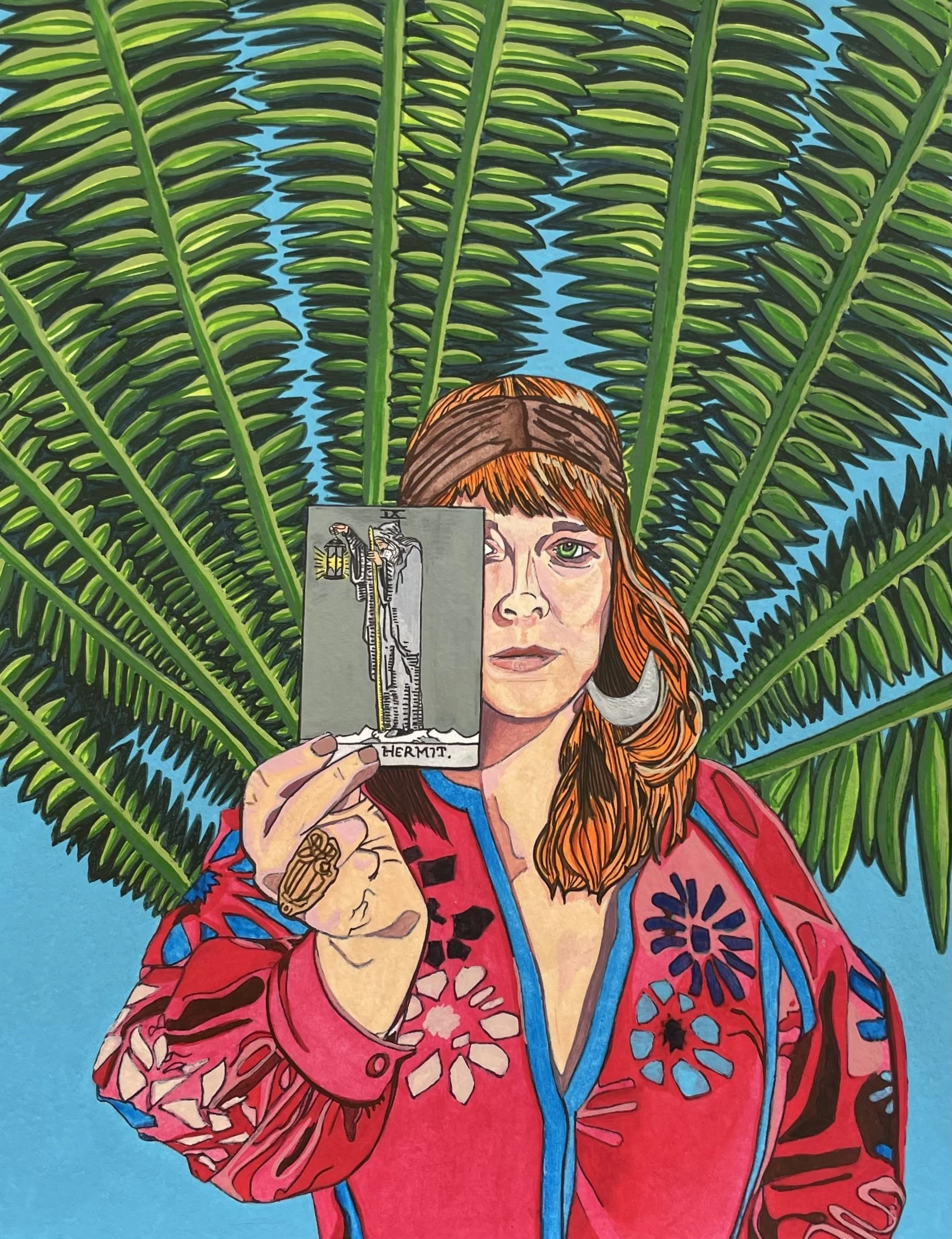
Mexican Cycad, Dioon spinulosm. The Hermit.
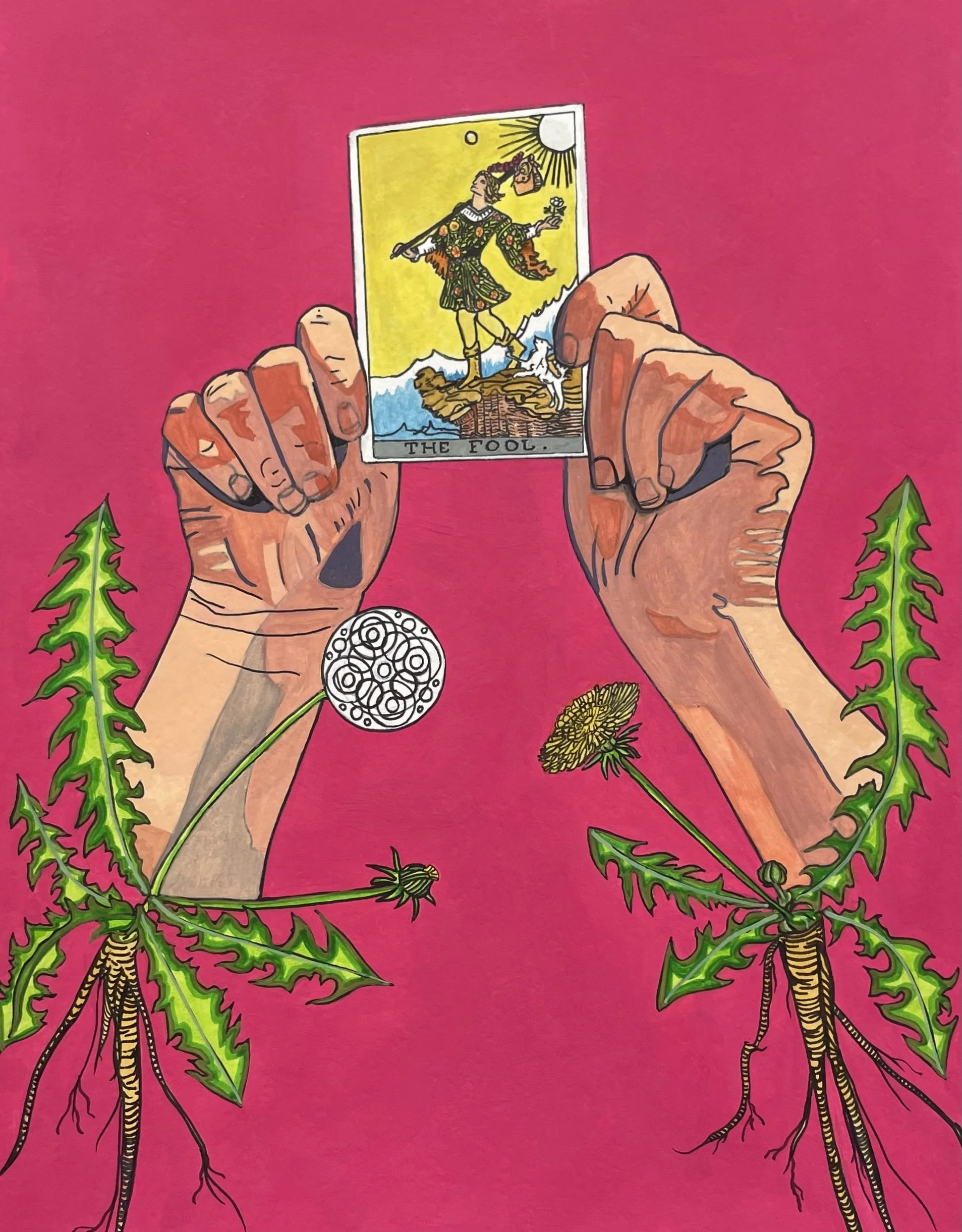
Dandelion. The Fool.
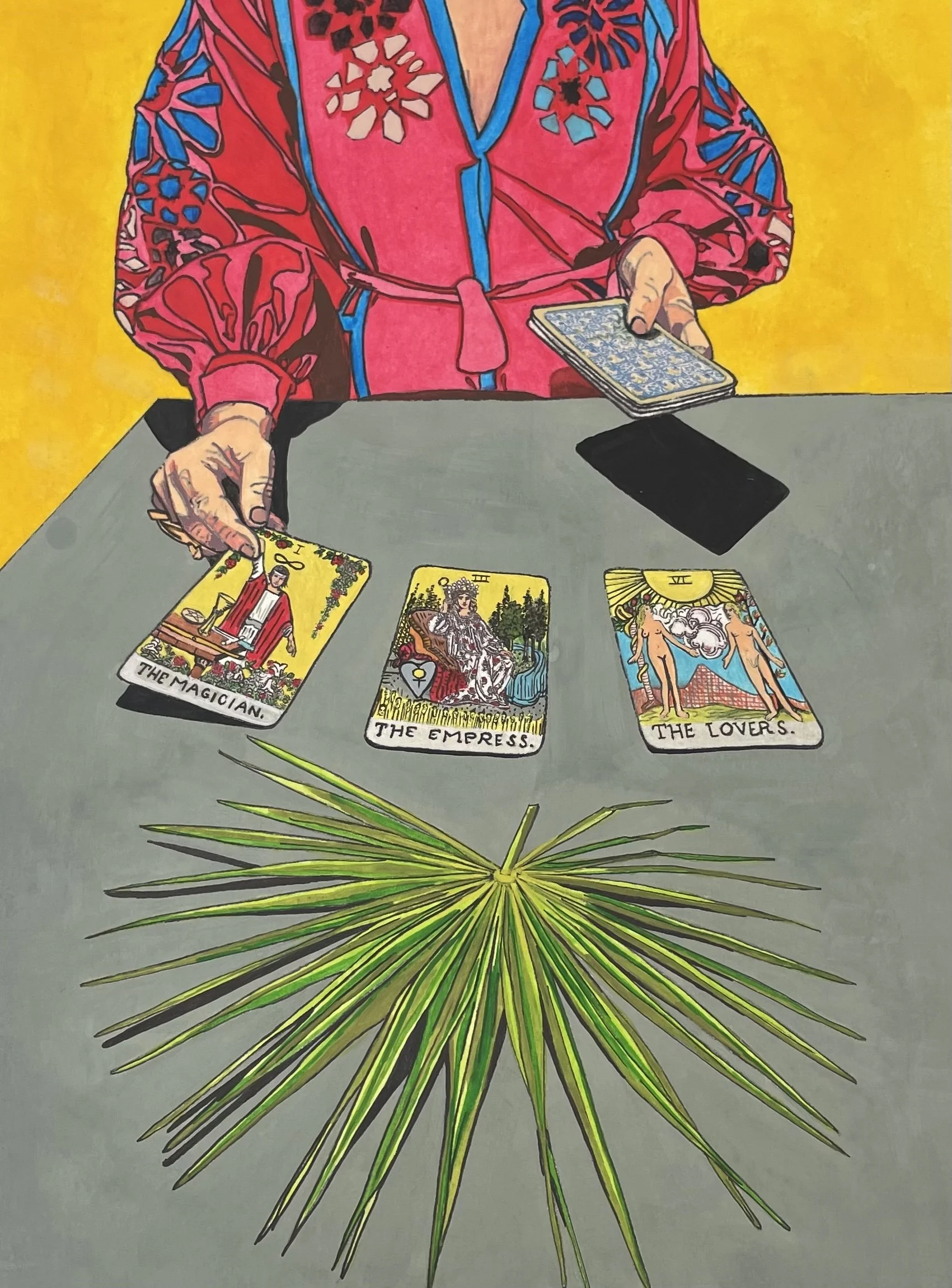
Xa’an, Huano. The Magician, The Empress, The Lovers.
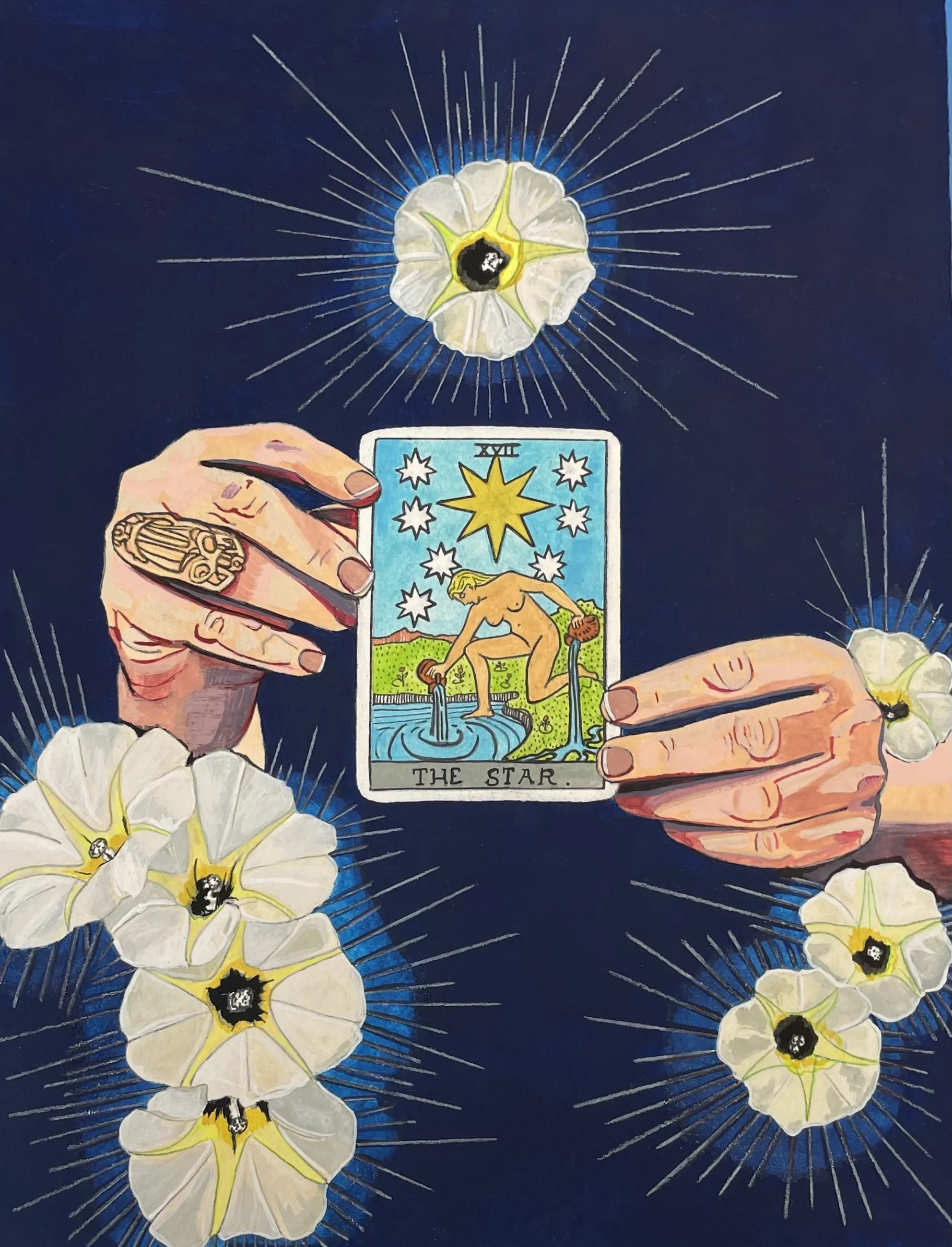
Xtabentun. The Star.
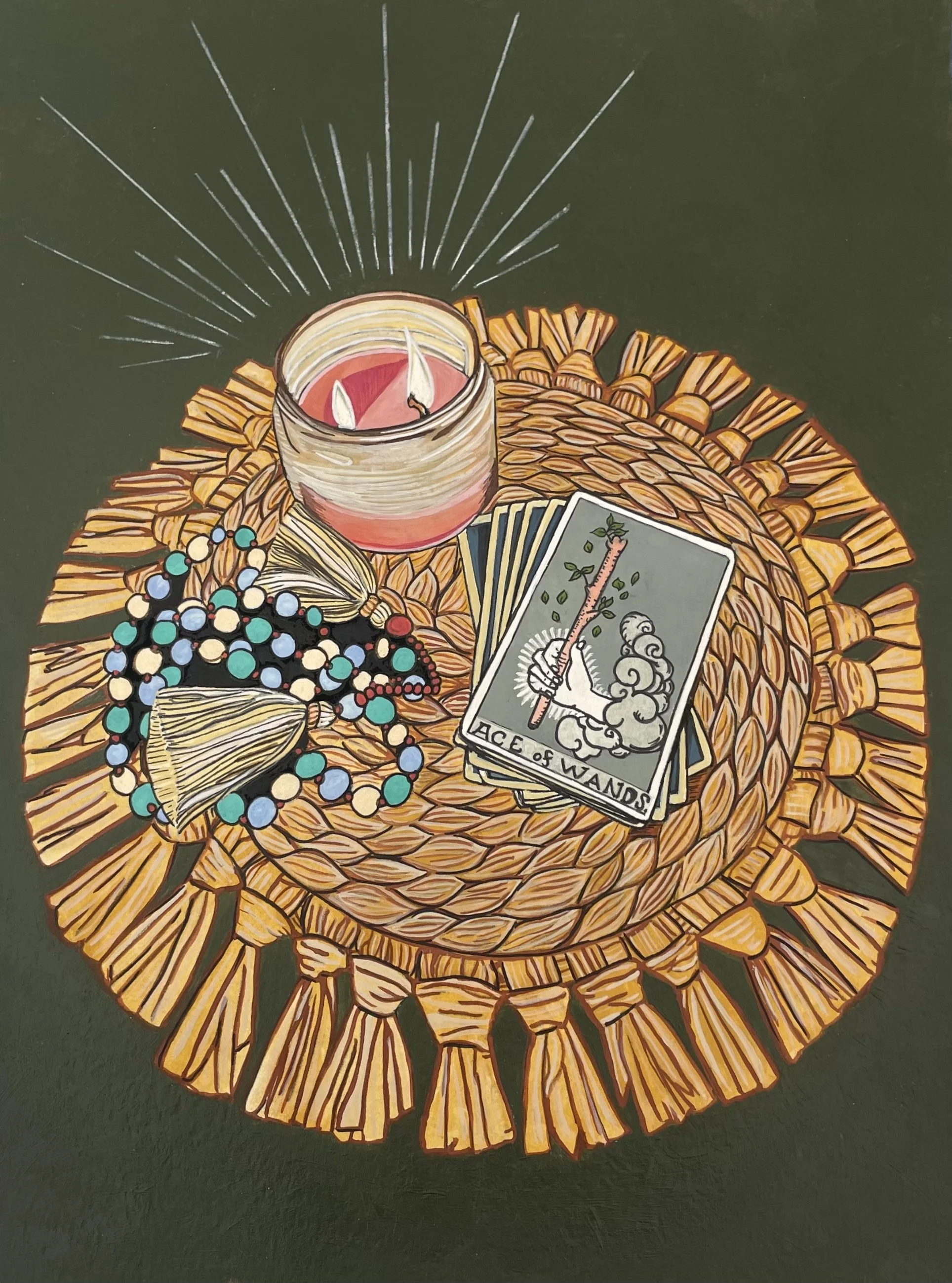
Mala Beads, Candle, and Ace of Wands on Woven Sisal.
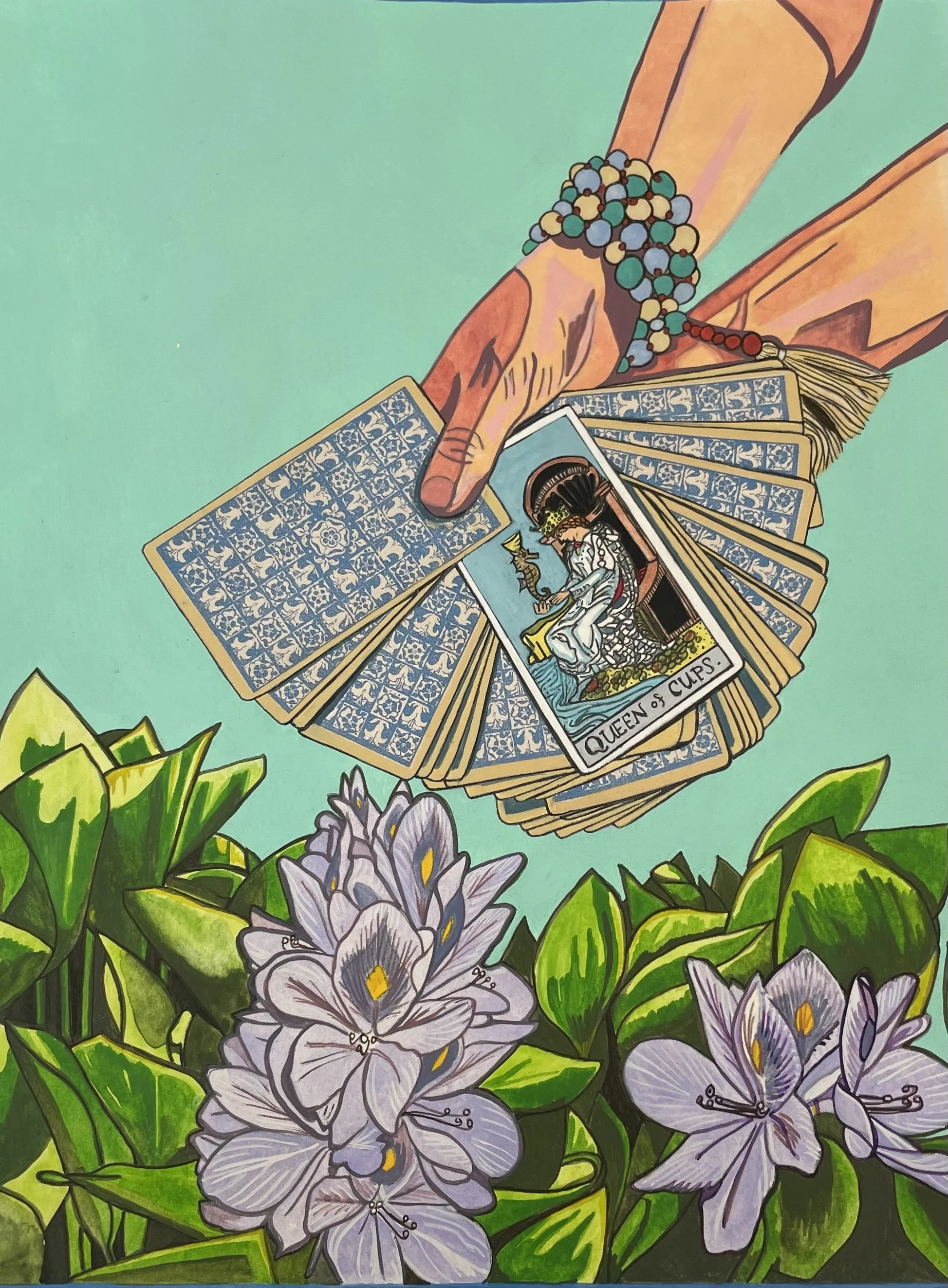
Water Hyacinth. Queen of Cups.
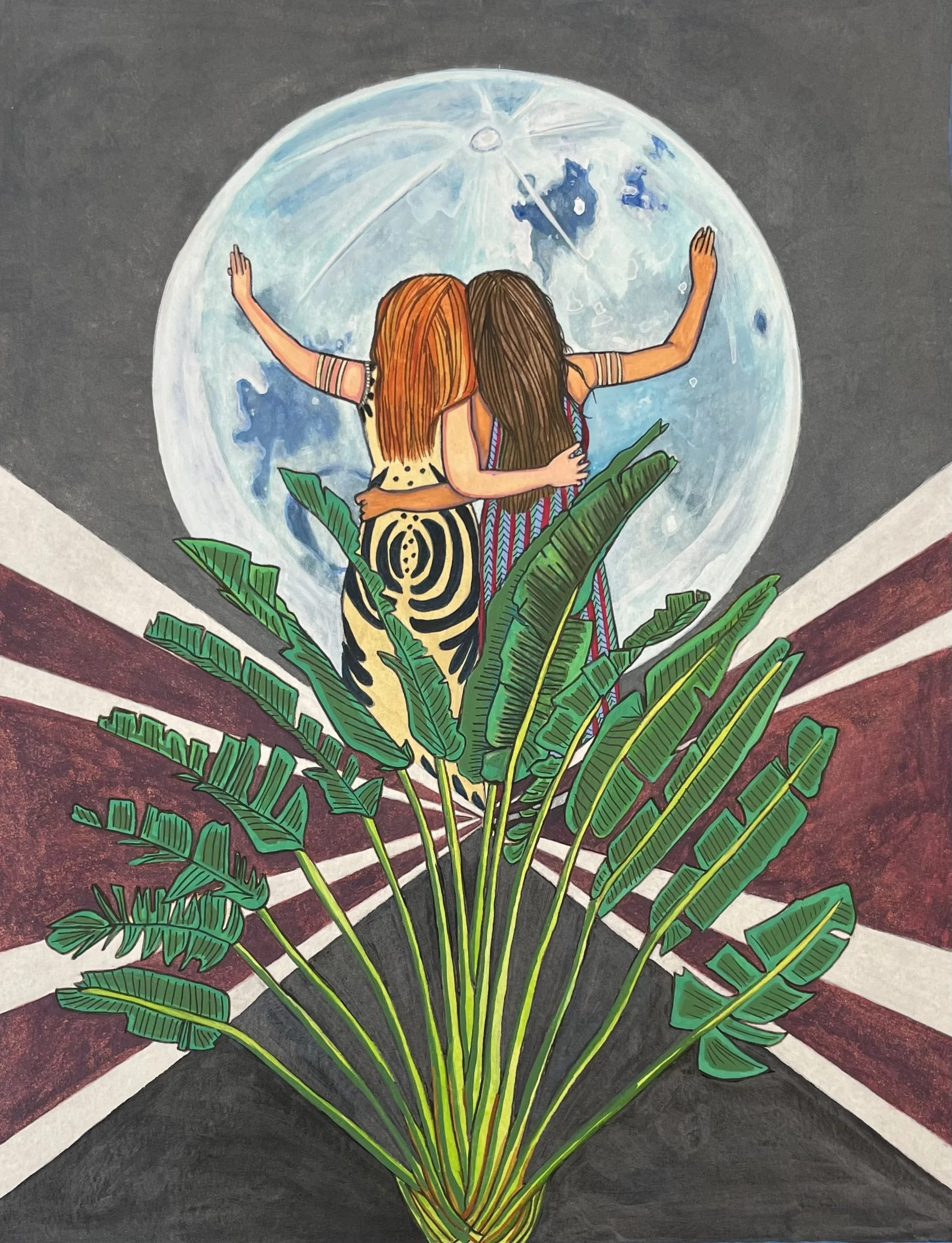
Under the Blue Moon 5/31/26.
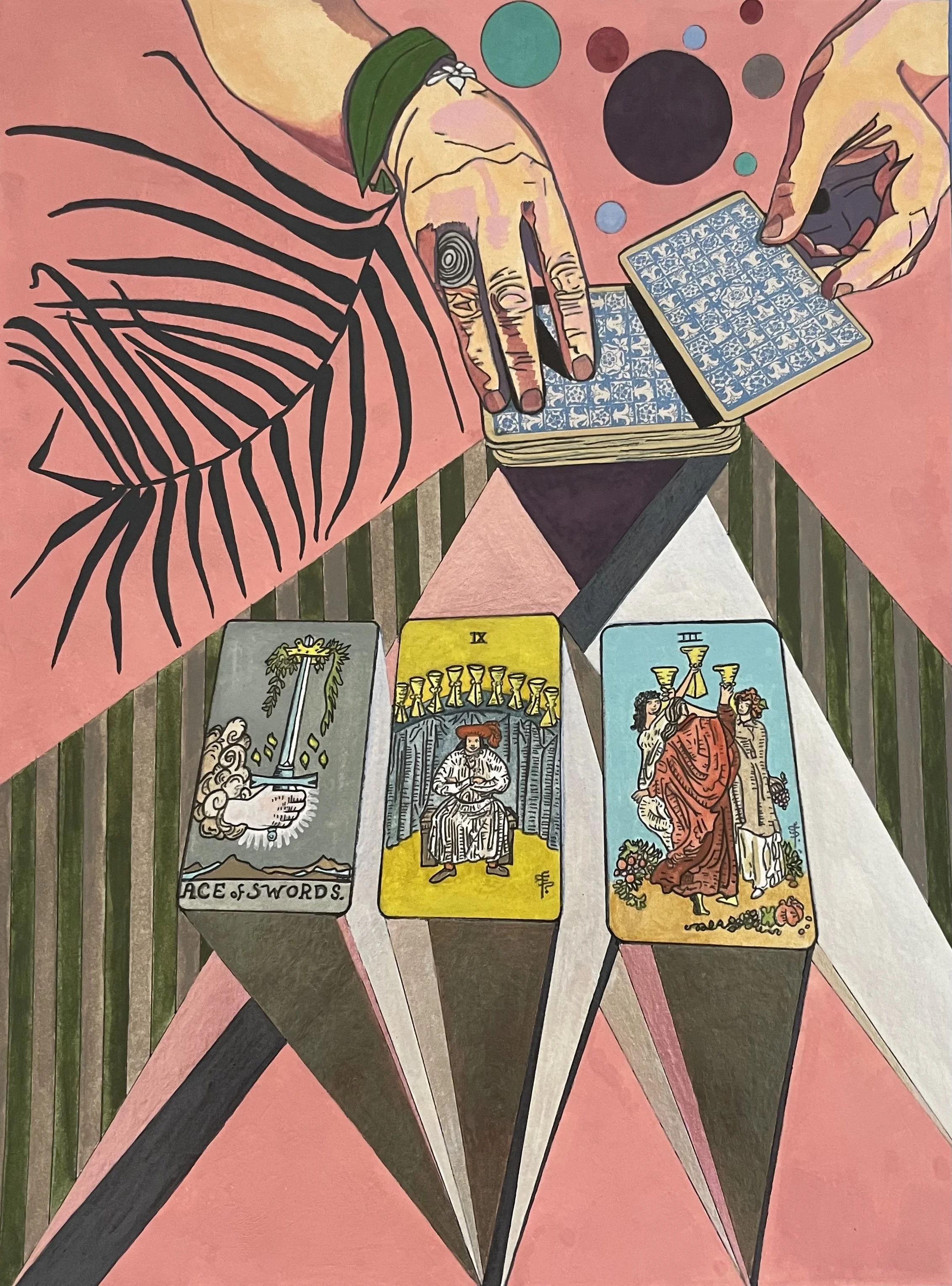
Ace of Swords, Nine of Cups, Three of Cups.
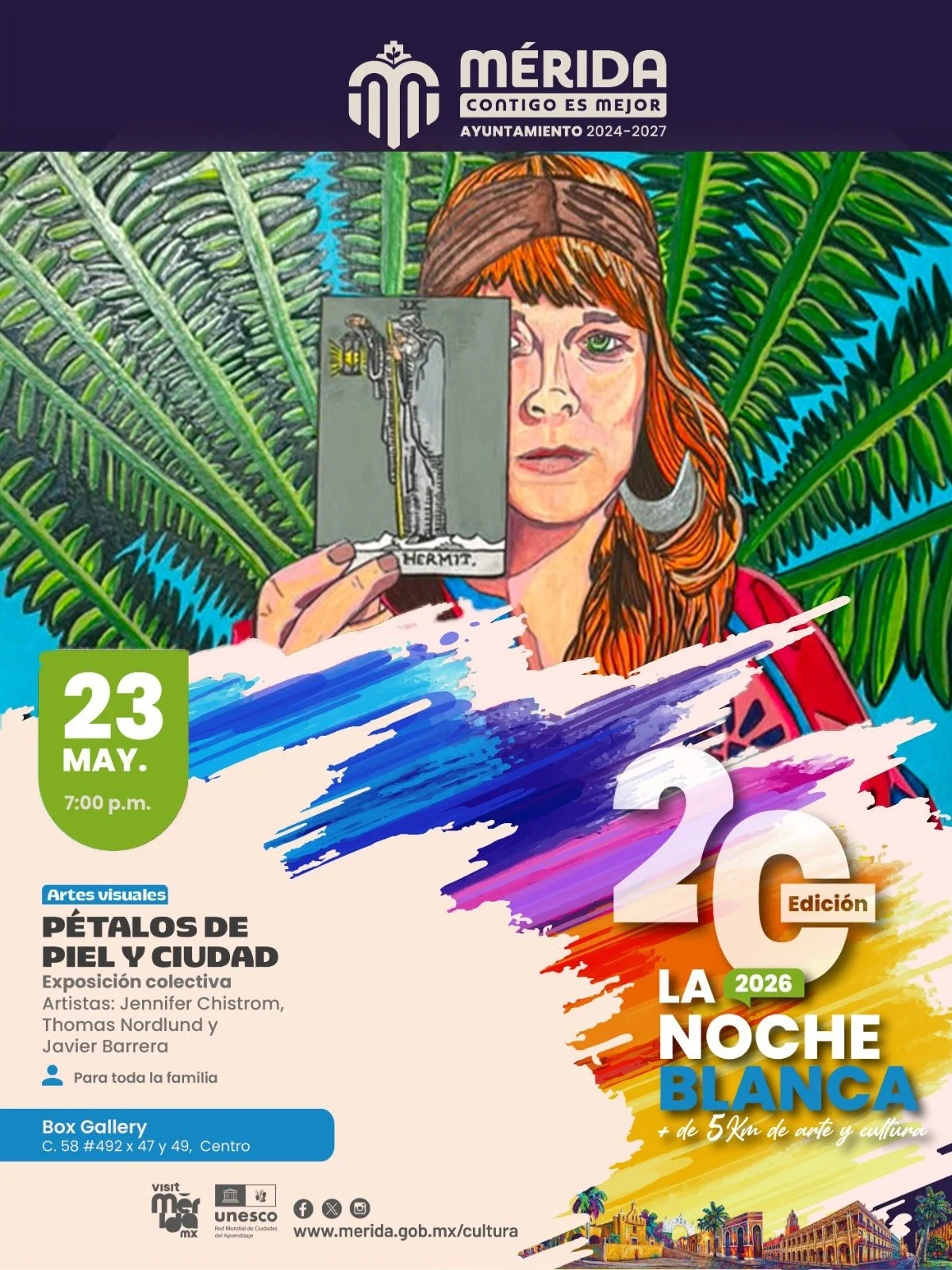
Exhibition: La Noche Blanca.
Notes on the series
A hard to photograph detail and its meaning:
Each painting has a hand painted metallic blue border, inspired by two things- ancient manuscripts and a recent archaeological discovery.
Ancient texts framed or bordered with lapis lazuli signified a celestial connection. Highly prized in the ancient world, this vibrant blue stone represented the heavens, making any text bearing its border—such as ancient scrolls, maps, or illuminated manuscripts—a deeply sacred object. Ancient cultures (such as the Sumerians, Babylonians, and Egyptians) viewed the deep blue stone, dotted with flecks of gold pyrite, as a physical manifestation of the celestial heavens and the starry night sky. A border of lapis served as a literal or symbolic gateway to the realm of the gods. Many ancients believed the stone had apotropaic (evil-repelling) qualities. Framing esoteric, magical, or religious scripture in lapis was believed to protect the knowledge within from malevolent spirits.
The earliest physical evidence we have of women scribes was recently discovered suggesting that female scribes and artists not only existed but were highly skilled, highly regarded, and entrusted with some of the most expensive pigments available to 11th-century artists. READ MORE
Please note: this series utilizes inspiration from imagery in the original 1909 Rider Waite Tarot deck, which is in the public domain.